Wildlife crime and illegal trafficking are among the most urgent yet under-addressed threats to global biological abundance.
Poaching, smuggling, and illicit trade networks are driving countless species toward extinction, disrupting ecosystems, and fuelling organized crime.
Despite the severe consequences, wildlife criminals often operate with near impunity - prosecution rates remain alarmingly low due to lack of specialized training, resources, and coordinated enforcement.
Without targeted intervention, we risk losing irreplaceable species and further destabilizing vulnerable natural environments.

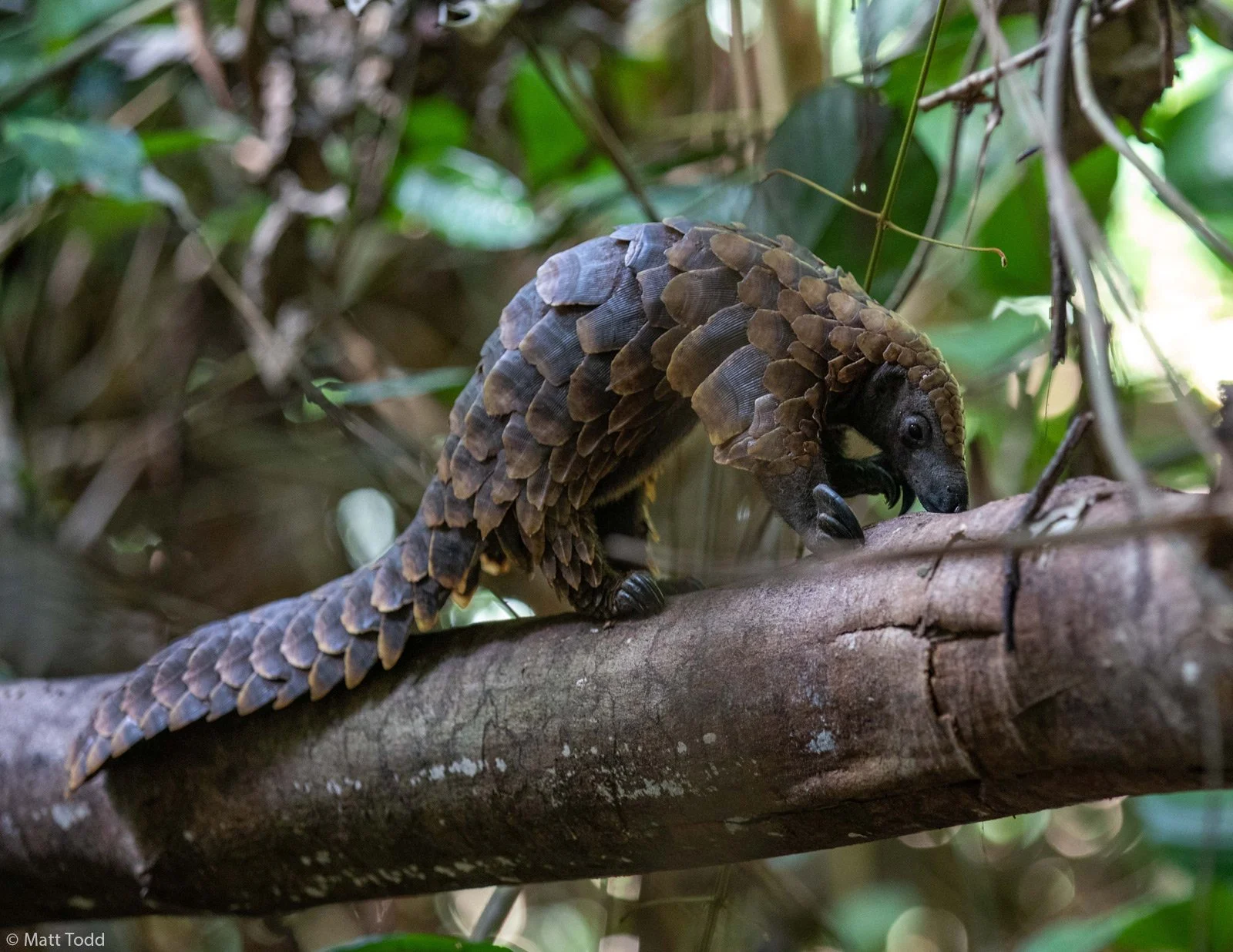
African black-bellied pangolin. Pangolins are considered the most trafficked mammals in the world. Despite being relatively unknown to the public, they account for up to 20% of the global illegal wildlife trade, with millions trafficked over the past decade. Photograph captured by Matt Todd in the Dzanga-Sangha National Park, Central African Republic.
Unregulated wildlife trade not only endangers animals but also poses serious risks to human health. Many zoonotic diseases - including SARS, Ebola, and potentially COVID-19 - have been linked to wildlife trafficking, where unsanitary conditions and lack of oversight enable pathogens to jump from animals to humans.
This creates a global public health threat with devastating social and economic consequences.
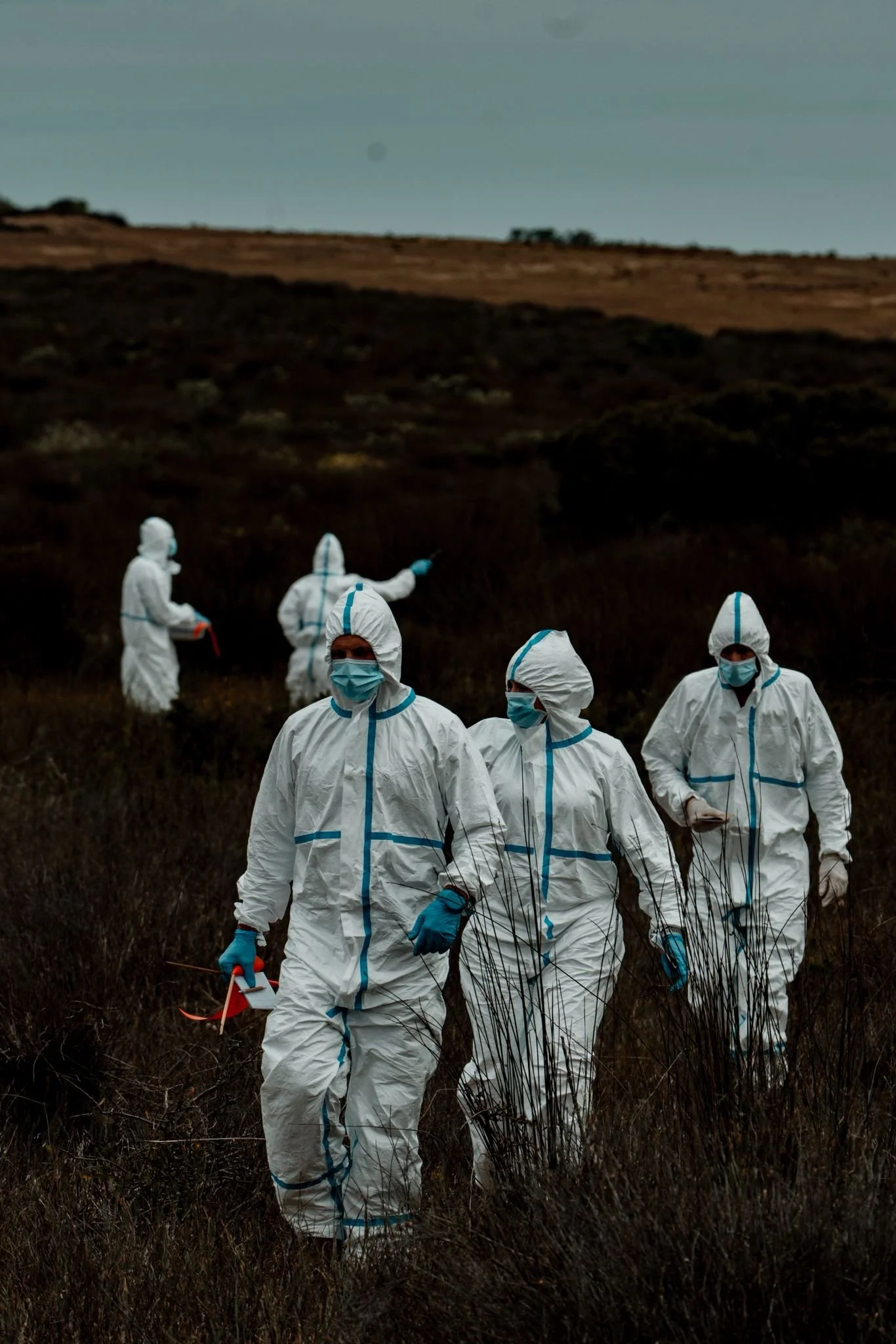
To address this, there is an urgent need to train wildlife professionals, law enforcement officers, and border security personnel in detecting, investigating, and prosecuting wildlife crimes. Equipping them with the skills to process wildlife crime scenes and understand forensic evidence is essential to disrupting trafficking networks and protecting both biodiversity and human health.

MEET THE TEAM
-
FOUNDER
Judge Holly Hughes was born and raised in the Pine Barrens of Southern New Jersey. Growing up in this rural setting she developed an early love for animals and nature. As a child she was always rescuing and adopting animals of all varieties. She was the quintessential serial adopter, "he followed me home mom. Can I keep him?"
Her parents, Bob and Joan, an electrical engineer and a librarian fostered a love of learning early on and that love continues to this day.
Judge Hughes attended John Jay College of Criminal Justice in Manhatten, New York where she graduated Magna Cum Laude.
Throughout her high school and college years she performed in multiple musicals. This love of the stage served her well, when after graduating Albany Law School she became a litigator.
Judge Hughes has a strong record of public service to Fulton County where she served as a Senior Assistant District Attorney with the Fulton County District Attorney's office in Atlanta, GA for close to ten years before opening her own firm. While at the D.A.s office she prosecuted some of the most high-profile cases in the United States. She also served as the Director of the Hate Crimes Unit, prosecuting the first hate crimes in the State of Georgia.
She is a highly sought after legal commentator, appearing over 800 times on national and local media platforms such as CNN, CNNI, Fox Network, the CBC and local media channels.
She is also a frequent guest lecturer at local colleges and law schools. She is also a published author, having worked for the McClatchy Tribune Group authoring articles that have been published across the country.
In 2017 Judge Hughes was appointed to the bench where she continues her dedication to public service. She handles all felony cases, from murder to theft and also presides over civil matters such as Landlord Tenant disputes, small claims and garnishments to name a few.
In 2024 she was privileged to attend the Wildlife Forensic Academy in South Africa. It proved to be a life-changing event. After being educated about the serious crimes of wildlife trafficking, trade and poaching. This afforded her the opportunity to expand her career of public service to an international level.
She has created the Wildlife Forensic Foundation in the United States to raise funds to support the continued training for Rangers and Law Enforcement in this vital field.
-
CEO
Dr. Greg Simpson qualified as a veterinarian in South Africa, working in the United Kingdom, Central Asia and Africa. After receiving a Masters Public Health in Developing Countries, as well as a Masters in Wildlife Management, he began developing a unique training clinic for veterinary students in a resource limited community outside the Kruger National Park, South Africa.
The clinic treated all wildlife in neighbouring reserves and not only made a difference to the local community through clinical service provision, but also school learner’s education and research. This research led to a Ph.D. on brucellosis in domestic animals, wildlife and humans.
-
TREASURER
Jessy currently serves on the State and Superior (Family Division) Courts of Fulton County, Georgia. With nearly two decades of judicial experience—including 17 years on the Fulton Magistrate and Administrative Law Courts—she is notably the first Indian female judge of South Asian descent appointed to the Georgia judiciary.
Since 2007, Judge Lall has presided over a wide range of civil and criminal matters, including personal injury, malpractice, landlord/tenant, construction disputes, divorce, custody, and family violence cases. She has also handled felony and misdemeanor cases, suppression hearings, bond hearings, and issued thousands of arrest and search warrants. In addition to her courtroom duties, she trains new judges and mentors incoming magistrates.
Before her judicial career, Jessy was a civil trial attorney on both the plaintiff and defense sides, handling litigation in areas such as personal injury, malpractice, real estate, and corporate matters. She later ran her own solo practice covering traffic, criminal, domestic, and real estate cases.
Outside the courtroom, she serves as a mediator and arbitrator with BAY Mediation and is a consultant with the RMN Agency, a legal recruiting firm. Jessy has held leadership roles on the Georgia Council of Magistrate Court Judges, the Georgia Asian Pacific American Bar Association (GAPABA), and served as President of the North Fulton Bar Association. She is also active in the Stonewall and South Asian Bar Associations and frequently participates as a speaker and mock trial judge.
Judge Lall earned her J.D. from Georgia State University College of Law in 1994 and holds a B.S. and M.B.A. from Wright State University in Ohio. Known for her balanced, respectful, and solution-oriented approach, she brings extensive judicial and litigation experience to every role she takes on.
-
SECRETARY
Landi holds a Master’s degree in Fynbos restoration and pollination biology - focused on preserving South Africa’s endemic and threatened vegetation. With a career in Nature Conservation, she brings hands-on experience as a nature reserve manager and as a lecturer and facilitator of nature-based programs. Before establishing herself in South Africa, Landi also worked in five-star passenger cruise ship facilities, honing her hospitality skills in diverse, high-pressure environments.
Her strong interest in environmental education, conservation and connecting with people, led her to the Wildlife Forensic Academy. With a penchant for detail, Landi plays a crucial role in ensuring the smooth and efficient operation Wildlife Forensic Academy, South Africa.
-
BOARD MEMBER
With over 35 years in the Criminal Justice Chain, Andro’s decision to build the Wildlife Forensic Academy came after his visit to the Southern African Wildlife College.
After hearing about the extent of wildlife crime, Andro visited a horrific crime scene. Since there were no witnesses, the poachers were going to get away with it. He then noticed there were forensic traces all over the scene, similar to those found on human crime scenes. No one else seemed aware of this.
It was then he decided to build the Wildlife Forensic Academy as a way to educate people on how to solve and prevent wildlife crime.
-
BOARD MEMBER
Brian J. Williams, CPM, is a Program Evaluation Specialist with the Fulton County Department of Behavioral Health & Developmental Disabilities (BHDD) in Atlanta, Georgia (USA). This agency is part of Fulton County Government and provides mental health & substance use/addiction treatment services to all Fulton County residents regardless of income, insurance status, or ability to pay. In addition, the Department of BHDD provides services to adults with Intellectual & Developmental Disabilities (IDD).
Brian is responsible for the Environment of Care and infrastructure of all the Department’s behavioral health clinical facilities and the state-of-the-art 24-hour the Behavioral Health Crisis Center. In addition, he helps to maintain the Department’s compliance with national health care accreditation standards.
Brian joined Fulton County Government in 2001 as a Resource Development Specialist with the Atlanta-Fulton Public Library System. During his tenure, he generated over $2 million in revenue for the largest library system in the state of Georgia through fundraising, U.S. federal Government grants, & philanthropic foundations. Prior to joining Fulton County Government, he served as Director of Development for Planned Parenthood of Georgia, and the AIDS Research Consortium of Atlanta (ARCA), where he was responsible for fundraising and resource development that generated significant revenues & donor development for both organizations.
Brian developed extensive marketing & fundraising skills by working in marketing/fundraising management for CARE International, the world’s largest international relief & development agency, which is headquartered in Atlanta, GA. During his tenure, his work took him to Nairobi, Kenya. His time in Nairobi ignited his lifelong love of Africa.
Before joining CARE International, Brian was a Business & Financial Analyst with the Dun & Bradstreet Corporation, and a Television News Reporter & Producer with NBC & ABC network affiliated television stations in North Carolina, Tennessee, and Atlanta. He has a Bachelor of Science Degree in Journalism and Minor in Government & Politics from the University of Maryland (College Park, Maryland), Master of Arts Degree in Political Science/International Relations from Georgia State University (Atlanta, Georgia), and a Certified Public Manager Certificate from the University of Georgia (Athens, Georgia). He is married and lives in Atlanta with his husband and dog Brussels.
-
BOARD MEMBER
Renee earned both her undergraduate and law degrees from Louisiana State University and has been a practicing attorney since 1980. She is admitted to the State Bars of Louisiana, Georgia, and Texas.
Growing up in Louisiana, Renee developed a strong connection to nature through summers spent on the bayous, swamps, and Gulf Coast. Hunting and fishing were a way of life, always guided by a deep respect for conservation to ensure future generations could enjoy the same traditions.
She has been a long-time supporter of wildlife and conservation efforts, particularly through her involvement with the Boone and Crockett Club—America’s oldest conservation organization, known for its role in shaping landmark legislation and protecting national parks and wildlife habitats. Renee has also supported a wide range of other conservation-focused groups, including organizations dedicated to the preservation of waterfowl, game birds, big game species, and coastal ecosystems.
Her lifelong commitment reflects a passion for ethical hunting, environmental stewardship, and the preservation of North America’s natural heritage.